


 Language: English












Solutions
Horse Construction offers full range of structural strengthening materials with technical supports, documentation supports, products supports, project supports.
Carbon Fiber for Increased Live Loads in Warehouses

Why Increased Live Loads Challenge Existing Warehouses
When imposed loads exceed original design assumptions, slabs and beams face:
Flexural capacity deficits: Insufficient resistance to bending under uniform or concentrated loads
Excessive deflection: Floor sag that impairs rack stability, AGV navigation, and worker safety
Punching shear risks: Local failure under rack bases or forklift point loads
Cracking and durability loss: Progressive damage that weakens the structure over time
Traditional fixes—such as adding concrete, steel plating, or supplemental columns—are heavy, disruptive, reduce ceiling height, and extend downtime. For warehouse operators prioritizing continuous operation, CFRP is the preferred alternative.

Carbon Fiber Reinforced Polymer (CFRP) has emerged as the most practical, cost-effective retrofit solution to safely upgrade floor slabs, beams, and columns without demolition, downtime, or significant structural alteration.
How CFRP Works to Boost Live Load Capacity
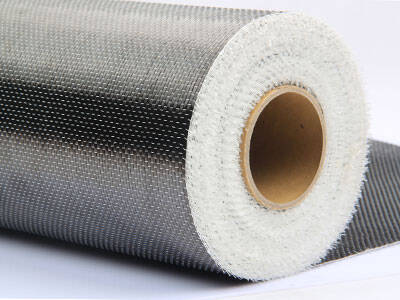
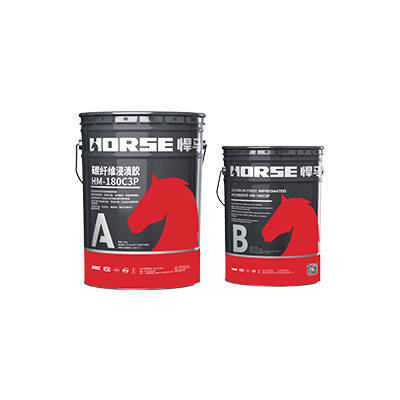
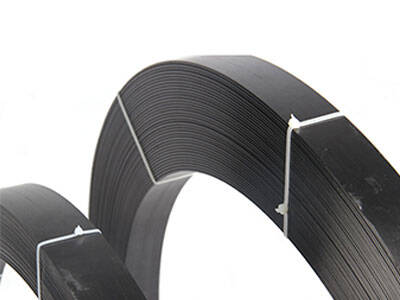
CFRP systems use high‑strength unidirectional carbon fiber sheets or plates bonded to concrete with specialized epoxy adhesives. Once cured, CFRP acts as external reinforcement that works compositely with the original structure:
Carries tensile forces: CFRP supplements or replaces stressed rebar in tension zones of slabs and beams
Reduces member stress: Lowers strain in concrete and steel, extending service life
Controls deflection and cracking: Improves stiffness to meet strict floor flatness tolerances for automation
Enhances shear and punching shear: U‑shaped CFRP wraps and localized strips strengthen critical zones
CFRP provides tensile strength up to 10 times that of steel at roughly 1/5 the weight, making it ideal for capacity upgrades without adding significant dead load.

Key Advantages of CFRP for Warehouse Live Load Upgrades
1. Minimal Disruption, Fast Installation
CFRP requires no heavy equipment, no demolition, and no formwork. Installation typically takes 3–7 days per zone, allowing phased work to maintain warehouse operations. Most facilities remain fully functional during retrofit.
2. Preserves Clear Height and Layout
At just 1–2 mm thick per layer, CFRP adds negligible thickness. It does not reduce ceiling clearance or interfere with racking, conveyors, or mezzanines—critical for automated warehouses.
3. High Strength & Predictable Capacity Gains
Engineered designs consistently deliver 25–60% higher flexural capacity and often meet or exceed full live load upgrades from 150 psf to 250–300 psf. Performance is verified via structural calculation and field load testing.
4. Corrosion Resistance & Long Service Life
CFRP is inert to moisture, chemicals, and warehouse humidity, eliminating rust or degradation. Properly installed systems provide 50+ years of service with minimal maintenance.
5. Code‑Compliant Performance
CFRP strengthening follows ACI 440.2‑23, IBC, and ASCE 7 provisions, ensuring designs meet code‑required load combinations, safety factors, and deflection limits for heavy storage occupancies.

Typical CFRP Applications for Warehouse Live Loads
1.Slab Strengthening
Bottom‑side bonding: Unidirectional CFRP sheets applied to slab soffits increase uniform live load capacity
Top‑side localized strips: Improve punching shear around rack bases and concentrated load points
Deflection control: Stiffer high‑modulus CFRP systems meet strict L/360 or tighter deflection criteria for AS/RS
2.Beam & Girder Upgrades
Flexural strengthening: CFRP sheets or plates bonded to beam bottoms increase moment capacity
Shear strengthening: U‑shaped CFRP wraps boost shear resistance at supports and high‑load spans
Joint enhancement: Improves performance at beam‑column connections under heavier load transfer
3.Column Confinement
Lightweight CFRP wrapping enhances axial capacity and ductility to support increased tributary live loads without enlarging footings.
Engineering & Installation Workflow
Structural Assessment: Engineer evaluates existing capacity, reviews drawings, and defines target live loads (e.g., 250 psf heavy storage)
Design per ACI 440: Calculates required CFRP layers, width, spacing, and anchorage; ensures compatibility with load combinations
Surface Preparation: Concrete is cleaned, profiled, and repaired to ensure full epoxy bond
CFRP Application: Epoxy primer, fiber placement, roller compaction, and topcoat application per specs
Curing & Quality Control: Full cure in 3–7 days; ultrasonic or acoustic testing verifies bond integrity
Load Testing & Signage: Optional proof loading at 1.1× service load; floor load rating posted for operations
You can find anything here you are in need of, have a trust trying on these products, you will find the big difference after that.

High strength, unidirectional carbon fiber wrap pre-saturated to form a carbon fiber reinforced polymer (CFRP) wrap used to strengthen structural concrete elements.

High strength, unidirectional carbon fiber fabric pre-saturated to form a carbon fiber reinforced polymer (CFRP) fabric used to strengthen structural concrete elements.

High strength, unidirectional carbon fiber sheet pre-saturated to form a carbon fiber reinforced polymer (CFRP) sheet used to strengthen structural concrete elements.
